




Starting a business is exciting, and choosing the right structure is one of the first big decisions you will make.
A Limited Liability Company, or LLC, is one of the most popular options for entrepreneurs.
If you are planning to start an LLC in Alabama, you are on the right track. An LLC offers flexible management and tax options while also protecting your personal assets.
That means if your business runs into legal issues or debt, your personal property, such as your home or car, is usually not at risk.
So, how do you start an LLC in Alabama? The process is actually more straightforward than many people expect. By following a few clear steps, you can set up your business legally and get it ready to operate.
From selecting a unique business name to submitting the required paperwork, Alabama has a fairly simple system for forming and maintaining an LLC.
This guide will walk you through everything you need to know about starting an LLC in Alabama in 2026.
You will learn how to choose a business name, file your Certificate of Formation, understand your tax responsibilities, and keep your LLC in good standing each year.
Whether you are launching your first business or restructuring an existing one, this guide will help you move through the process with confidence.
Let’s take a closer look at the steps to form an LLC in Alabama and get your business set up for long term success.
Why Choose an LLC?
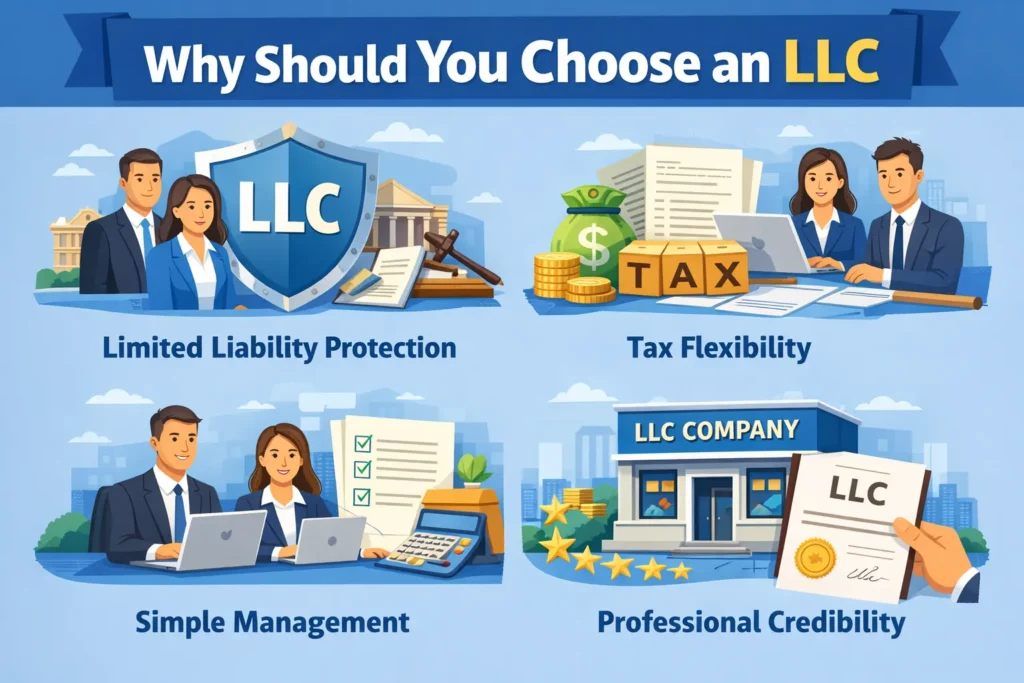
Before diving into the details, you might be wondering: why should I choose an LLC for my business in Alabama? There are several reasons:
- Limited Liability Protection: As the name suggests, an LLC limits the liability of its owners (members). This means that, as an owner, your personal assets (like your home or car) are typically protected from business debts and lawsuits.
- Pass-Through Taxation: An LLC is considered a “pass-through” entity by the IRS, meaning the business itself doesn’t pay taxes. Instead, profits and losses are passed through to members’ personal tax returns, avoiding the double taxation that corporations face.
- Flexibility: LLCs provide flexibility in management and tax options. You can choose to have your LLC taxed as a sole proprietorship, partnership, or even elect to be taxed as an S Corporation or C Corporation.
- Credibility: Having an LLC shows clients, partners, and customers that you’re serious about your business and its operations. This can enhance your professional reputation.
Now that you understand the basics, let’s walk through the steps for starting an LLC in Alabama.
Cost Breakdown for Filing an LLC in Alabama
| Fee Type | Amount (in USD) |
|---|---|
| LLC Formation Fee | $230 |
| Name Reservation (optional) | $28 |
| Registered Agent (annual) | $50 – $300 |
| Annual Report Fee | $100 |
1. Search Your LLC Name
One of the first things you’ll need to do when forming an LLC in Alabama is choose a name for your business. It’s important to pick a name that is unique, memorable, and reflects your brand.
What to Keep in Mind:
- Unique Name: The name you choose for your LLC must be distinguishable from other LLCs, corporations, and limited partnerships already registered in Alabama. The Alabama Secretary of State’s website provides a database to check name availability.
- Required Words: Your LLC name must include the words “Limited Liability Company” or the abbreviation “LLC” or “L.L.C.”
- Restricted Words: Certain words (like “bank” or “insurance”) are restricted and require special permission. Be sure your name complies with Alabama’s naming regulations.
Steps to Check Availability:
- Visit the Alabama Secretary of State website.
- Use their search tool to check if your desired name is available. If it’s taken, you’ll need to come up with another name.
Tip: It’s also a good idea to check for the availability of a matching domain name for your website and ensure there are no trademarks on the name you choose.
2. Choose a Registered Agent
Every LLC in Alabama must designate a Registered Agent. This person or business entity will be responsible for receiving legal documents, such as service of process (lawsuits), tax notices, and other official correspondence on behalf of your LLC.
Who Can Be a Registered Agent?
- An Individual Resident: You can serve as your own Registered Agent if you live in Alabama. However, this can be a hassle if you’re unavailable during regular business hours.
- A Business Entity: If you don’t want to handle the paperwork yourself, you can hire a professional Registered Agent service. These services are familiar with the paperwork requirements and ensure you don’t miss any deadlines.
Recommended Service:
While you can act as your own Registered Agent, many entrepreneurs choose to hire a professional service for reliability and peace of mind.
A service like Northwest Registered Agent is highly recommended for its excellent customer service and robust privacy protection.
3. File the LLC Certificate of Formation
After deciding on your name and selecting a Registered Agent, the next step is to file the LLC’s Certificate of Formation (also known as the Articles of Organization) with the Alabama Secretary of State. This is the official document that creates your LLC.
What’s Included in the Certificate of Formation?
- LLC Name: The official name of your LLC.
- Registered Agent Name and Address: The name and physical address of your Registered Agent.
- Management Structure: Whether your LLC will be managed by members (owners) or managers.
- Effective Date: The date you want your LLC to be legally formed (this can be the date of filing or a later date).
Filing Fee:
The filing fee for the Certificate of Formation is $200. You can file online or by mail. Filing online is the fastest way to complete this step.
How Long Does it Take?
- Online Filing: Typically takes 1-2 business days for approval.
- Mail Filing: May take up to 3-5 business days.
Once your Certificate of Formation is approved, you’ll receive a Certificate of Formation from the Alabama Secretary of State, officially marking the formation of your LLC.
4. Create an Alabama LLC Operating Agreement
While Alabama doesn’t require an Operating Agreement for your LLC, it’s highly recommended that you create one.
This internal document outlines the management structure and operational procedures for your business.
Why You Need an Operating Agreement:
- Clarifies Ownership: An Operating Agreement specifies each member’s ownership percentage and the responsibilities of each member.
- Avoids Conflicts: By laying out the rules for decision-making, profit-sharing, and dispute resolution, an Operating Agreement can help avoid conflicts among members down the road.
- Proves LLC Status: If your LLC is ever questioned legally, having an Operating Agreement helps prove that the LLC is a legitimate separate entity and not just a sole proprietorship.
What Should Be in the Operating Agreement?
- Names and Contributions: Names of LLC members and their respective financial contributions.
- Management Structure: Whether your LLC is member-managed or manager-managed.
- Voting Rights: How decisions will be made and voting power.
- Profit and Loss Distribution: How profits and losses will be divided among members.
- Dissolution: Guidelines for dissolving the LLC if necessary.
5. Get an EIN for Your LLC
An Employer Identification Number (EIN) is a unique identifier for your business and is required by the IRS for tax purposes.
You’ll need an EIN to open a business bank account, hire employees, and file federal taxes.
How to Get an EIN:
The IRS makes it easy to apply for an EIN online. The application is free and typically takes less than 10 minutes to complete.
Once you submit the application, you’ll immediately receive your EIN, which you can use for various business tasks, such as setting up payroll or filing taxes.
6. File Your Initial Business Privilege Tax Return
In Alabama, LLCs are subject to a Business Privilege Tax (BPT), which is due within 2.5 months of forming your LLC. The BPT is calculated based on your LLC’s income.
How Much Does the Initial BPT Report Cost?
The cost of the Business Privilege Tax depends on your LLC’s income. If your LLC’s income is $100,000 or less, you’ll pay a minimum tax of $100.
When Is the Initial BPT Due?
The BPT return is due 2.5 months after your LLC is formed. For example, if your LLC is formed in March, your BPT return will be due by May 15.
How Do I File My Initial BPT?
The BPT return is filed with the Alabama Department of Revenue. You can file online through the department’s website or by mail using the appropriate forms.
What Do I Do After My LLC Is Approved?
Once your LLC is officially formed, you must take care of ongoing business compliance.
1. File the Annual Report & Pay the BPT
Each year, you must file an annual report and pay your Business Privilege Tax. While the filing fee for the annual report is $10, the BPT fee will depend on your LLC’s revenue.
- BPT Filing Deadline: April 15 each year.
- Annual Report Filing Deadline: The annual report must be filed along with your BPT return each year.
2. Pay State and Federal Taxes
As an LLC, your tax responsibilities depend on how your LLC is structured.
By default, a single-member LLC is taxed as a disregarded entity (similar to a sole proprietorship), and a multi-member LLC is taxed as a partnership.
However, you can choose to have your LLC taxed as an S Corporation or C Corporation by filing the appropriate forms with the IRS.
Best LLC Formation Services in 2026
While it is possible to start an LLC on your own, many entrepreneurs use formation services to simplify the process.
These services handle paperwork, filing, compliance reminders, and sometimes additional business tools.
Based on customer reviews, pricing, and overall reliability, several companies consistently rank among the most popular choices.
ZenBusiness

ZenBusiness is widely praised for its affordability and beginner friendly platform. Many entrepreneurs appreciate how simple the setup process is.
Popular features include
• Affordable formation packages
• Registered agent services
• Compliance reminders
• Business website tools
Customer reviews often highlight the clean interface and helpful customer support.
Northwest Registered Agent
Northwest Registered Agent is known for strong customer service and privacy protection.
Many entrepreneurs choose this service because it focuses heavily on compliance and registered agent support.
Key benefits include
• Privacy focused business filings
• Experienced support team
• Transparent pricing
• Reliable registered agent services
Reviews frequently mention the company’s knowledgeable support staff.
LegalZoom
LegalZoom is one of the most recognized brands in the online legal services industry. It offers a wide range of business and legal solutions beyond LLC formation.
Entrepreneurs who want access to additional legal services often choose LegalZoom.
Some key features include
• Business formation services
• Legal document templates
• Access to legal professionals
• Trademark and intellectual property services
However, reviews often mention that the pricing can be higher compared to other formation services.
Bizee

Bizee, previously known as Incfile, is popular among entrepreneurs looking for affordable formation options.
The company offers a free basic package where you only pay the state filing fee.
Common highlights from reviews include
• Free LLC formation package
• Registered agent services
• Fast filing options
• Straightforward dashboard
Many small business owners appreciate the value for money.
FAQs
Do I Need a Business License in Alabama?
It depends on the nature of your business and where you are located. Some businesses require local business licenses, while others do not. Be sure to check with your city or county office to determine if a business license is required.
Can I Form an LLC in Alabama if I Am Not a Resident?
Yes, you can form an LLC in Alabama even if you are not a resident of the state. However, you must designate a Registered Agent with a physical address in Alabama to handle your LLC’s legal and tax correspondence.
How Do I File My Annual Report?
Once your LLC is formed, you’ll need to file an annual report with the Alabama Secretary of State. The fee is typically $10, and the report is due by April 15 each year.