




Starting a business in Vermont can be an exciting step, and forming a limited liability company (LLC) is one of the most popular ways to do it.
An LLC offers personal liability protection, flexible management options, and a relatively simple structure compared with other business entities like corporations.
Whether you’re a solo entrepreneur, a small team, or planning a larger venture, creating an LLC in Vermont gives your business a professional presence while keeping your personal assets separate from business debts or legal claims.
The process is straightforward, but there are important steps you need to follow carefully.
From choosing a unique and compliant business name to filing official paperwork with the state, each step ensures your LLC is legally recognized and able to operate without issues.
You’ll also need to appoint a registered agent, consider drafting an operating agreement, and obtain an Employer Identification Number (EIN) for banking and tax purposes.
Beyond formation, maintaining your LLC means understanding Vermont’s tax obligations, filing annual reports, and keeping proper business records.
Many entrepreneurs also turn to professional LLC services to simplify the process and avoid mistakes.
In this guide, we’ll break down everything step by step, making it easy to start your Vermont LLC in 2026 with confidence.
Costs to File an LLC in Vermont
| Expense | Cost |
|---|---|
| Articles of Organization filing fee | $125 (online filing; higher for some filings) |
| Registered agent service (optional) | $100–$300 per year |
| Annual Report fee | $35 per year |
| LLC name reservation (optional) | $20–$25 |
| Operating Agreement | Free to self-draft or paid templates |
| EIN (IRS) | Free |
The basic cost is just the state filing fee, though using a professional registered agent or templates can add to the total.
What is an LLC?
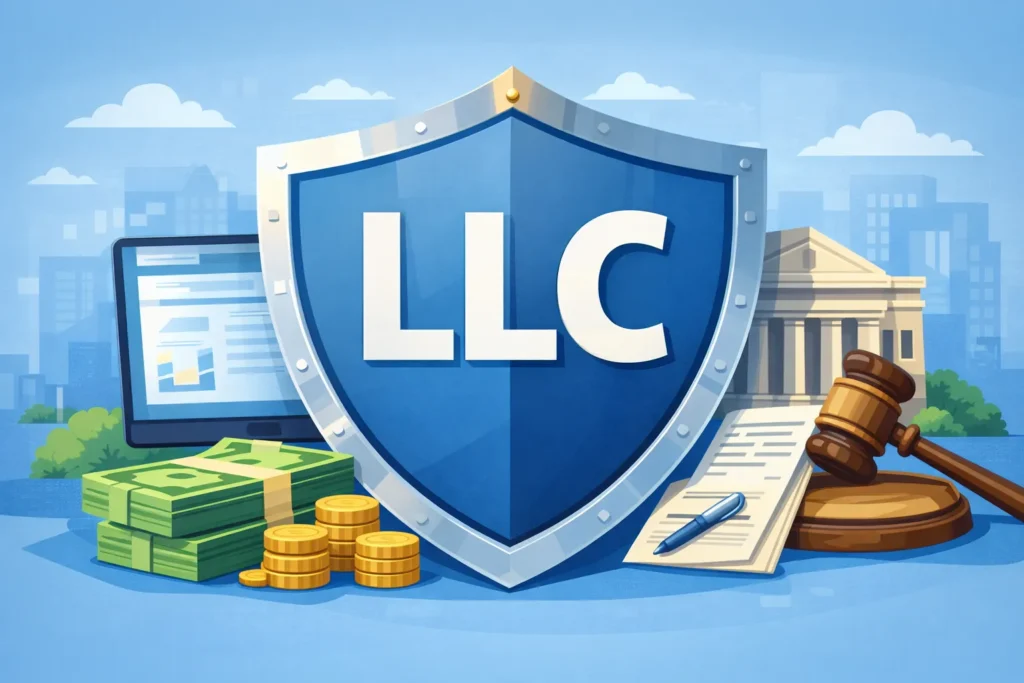
A limited liability company, or LLC, is a type of business structure that combines the flexibility of a partnership with the legal protection of a corporation.
One of the biggest advantages of an LLC is that it protects your personal assets.
This means that if your business faces debts, lawsuits, or other liabilities, your personal savings, home, and other assets are generally shielded from claims.
LLCs are also flexible when it comes to management and taxation. You can run your LLC yourself as a single member, share management with partners, or hire managers to operate the business.
For taxes, most LLCs are treated as “pass-through” entities. This means profits and losses flow directly to the owners’ personal tax returns, avoiding the double taxation that corporations sometimes face.
However, an LLC can also choose to be taxed as a corporation if that better suits the business.
Another key feature of an LLC is simplicity. Compared with corporations, LLCs usually require less paperwork, fewer formal meetings, and simpler recordkeeping.
This makes them ideal for small businesses, startups, and even side hustles. At the same time, an LLC gives your business credibility, showing customers, partners, and lenders that you have a formal, recognized structure.
In short, an LLC provides protection, flexibility, and legitimacy, making it one of the most popular choices for new business owners.
Here Are the Steps to Forming an LLC
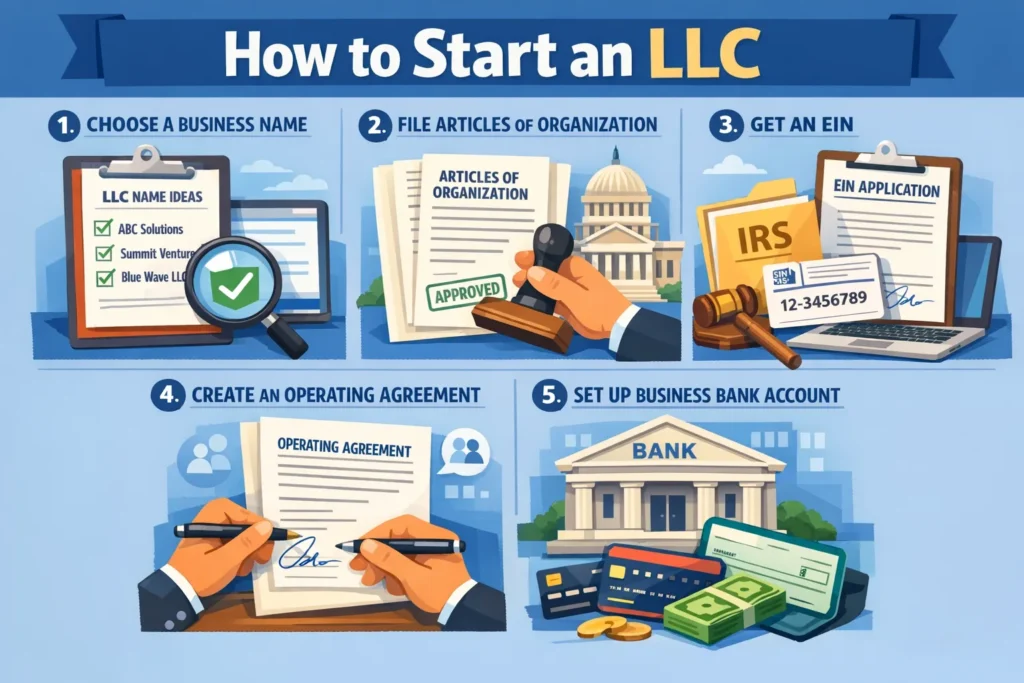
Follow these steps in order to make sure your LLC is legally compliant and ready to operate.
1. Search Your LLC Name
Before filing, your LLC name must be available and meet Vermont’s rules.
LLC Naming Requirements
- Must be distinguishable from existing Vermont business names.
- Must include “Limited Liability Company,” “LLC,” or an acceptable abbreviation like “L.L.C.”
- Optional: reserve your name in advance for a small fee to ensure no one else takes it while you prepare your filings.
2. Choose a Registered Agent
Every Vermont LLC must have a registered agent, who receives legal documents on behalf of your business.
Who Can Be a Registered Agent?
- You can act as your own registered agent if you have a physical Vermont address and are available during business hours.
- Many people use professional services for privacy and convenience.
- Top services are ZenBusiness, Northwest Registered Agent, LegalZoom, and BetterLegal. They handle official mail and compliance reminders.
3. File Articles of Organization
This is the document that officially creates your LLC in Vermont.
Key Information Required in the Articles of Organization
- LLC name and business address
- Registered agent’s name and address
- Whether your LLC is member-managed or manager-managed
- Names and addresses of members or managers
- Optional business purpose statement
Filing online is usually faster than by mail. Once approved, your LLC is officially a legal entity.
4. Create an Operating Agreement
Even though Vermont doesn’t require this document, it’s highly recommended.
Key Elements of an Operating Agreement
- Ownership percentages and member roles
- Voting and decision-making procedures
- Profit and loss distribution
- Rules for member departures or adding new members
- Guidelines for resolving disputes
This document helps protect your liability and clarifies business operations, even if you are the sole owner.
5. Get an EIN for Your LLC
An Employer Identification Number (EIN) is needed for taxes, bank accounts, and hiring employees.
How Can I Get an EIN?
- Apply online directly with the IRS for free.
- You’ll need it to open a business bank account and for federal tax purposes.
Top LLC Services You Might Consider
If you want to save time or reduce errors, these services are popular among business owners:
Here’s a clear and honest breakdown of top LLC formation services you might consider if you’re forming an Idaho LLC in 2026.
These services handle paperwork, state filings, and compliance reminders so you can focus on building your business — and different services shine in different areas depending on what you value most.
1. Northwest Registered Agent
Northwest Registered Agent is widely respected for its privacy protection and customer support. Unlike many competitors, the company focuses on straightforward pricing without heavy upselling.
Key benefits include:
• Excellent customer support from knowledgeable staff
• Strong privacy protection for business owners
• Free registered agent service for the first year with formation packages
• Transparent pricing structure
• Fast document processing
Many entrepreneurs appreciate the company’s focus on helping business owners understand the formation process rather than pushing unnecessary add ons.
2. ZenBusiness
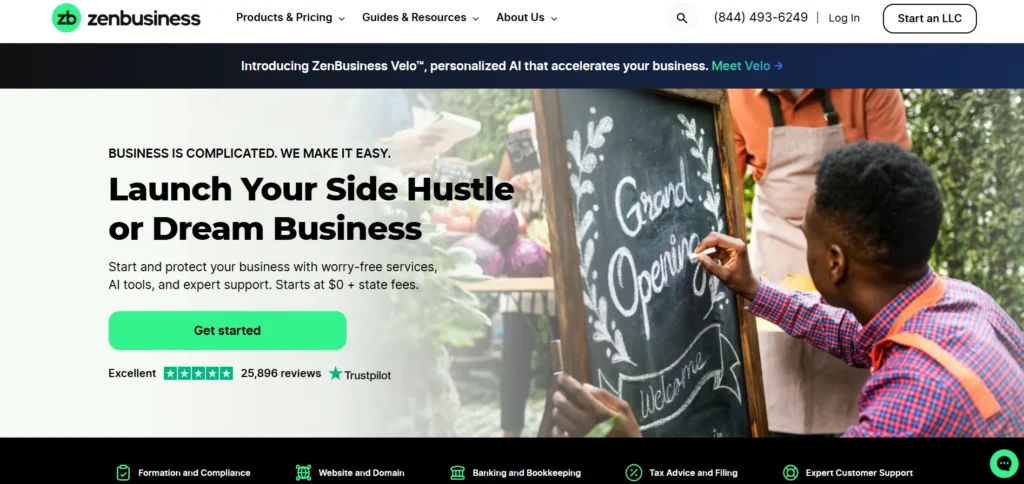
ZenBusiness has quickly become one of the most popular LLC formation services for small businesses and startups.
Its platform is designed to be beginner friendly, and the company offers affordable pricing tiers for different needs.
Popular features include:
• Affordable starter packages
• Compliance monitoring tools
• Operating agreement templates
• Business website and domain options
• Ongoing customer support
ZenBusiness is often recommended for entrepreneurs who want an easy to use service with a wide range of additional business tools.
3. LegalZoom

LegalZoom is one of the most recognizable names in the online legal services industry. The company has helped millions of entrepreneurs start businesses and handle legal paperwork.
Advantages include:
• Strong brand reputation
• Large library of legal resources
• Access to legal professionals
• Multiple business formation services
• Well established customer support system
Although LegalZoom is typically more expensive than other services, many entrepreneurs choose it because of its experience and reputation.
4. Bizee (formerly Incfile)

Bizee, previously known as Incfile, is known for offering affordable LLC formation packages. The company has helped form hundreds of thousands of businesses across the United States.
Key features include:
• Free LLC formation package (state fee not included)
• Free registered agent service for the first year
• Easy to use online dashboard
• Lifetime company alerts for compliance reminders
• Fast processing times
For budget conscious entrepreneurs, Bizee remains one of the most attractive options available.
5. Tailor Brands
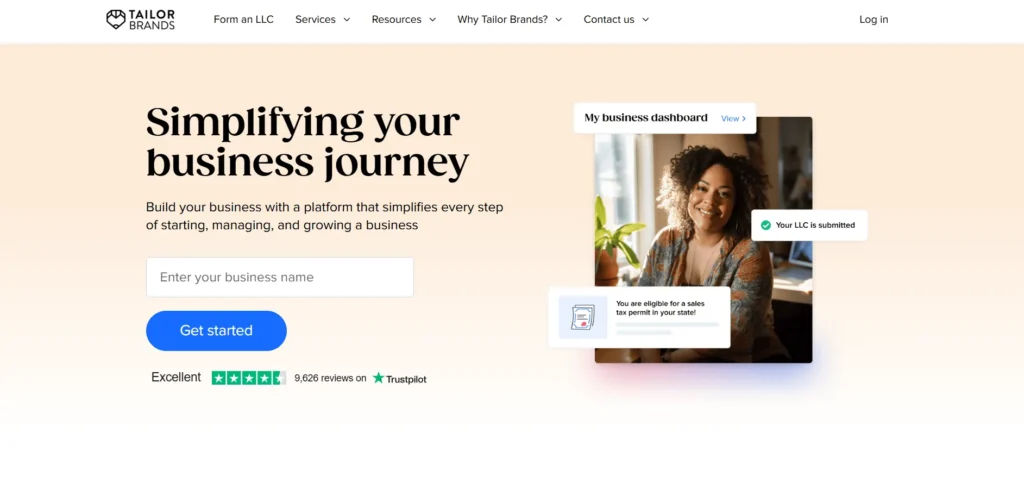
Tailor Brands is slightly different from traditional LLC formation companies because it combines business formation with branding tools.
Entrepreneurs can create logos, build websites, and develop brand assets alongside their LLC formation.
Popular features include:
• Logo design tools
• Website building platform
• Brand identity services
• LLC formation packages
• Social media branding tools
This service is often appealing for new entrepreneurs who want both business formation and branding support in one place.
Each of these services has its own strengths, and users often compare features like pricing, turnaround time, customer service, and extras like compliance alerts or document storage.
Choosing the right service depends on your budget and how much hands-on support you want.
What Do I Do After My LLC Is Approved?
Approval is just the beginning. Next, you’ll want to take these steps to keep your business running smoothly.
Open a Business Bank Account
Separate your personal and business finances. You’ll need your EIN and a copy of your Articles of Organization.
Apply for Necessary Business Licenses and Permits
Depending on your business type and location in Vermont, you may need permits at the local or state level. Check requirements before starting operations.
Understand Vermont Taxes
Most Vermont LLCs are “pass-through” entities, meaning profits and losses go on your personal tax return. You may also need to collect sales tax or handle employer taxes if you hire employees.
File Your Annual Report
Vermont requires LLCs to file an annual report with a $35 fee. Missing the deadline can cause your LLC to fall out of good standing.
Maintain Proper Records
Keep copies of Articles of Organization, operating agreements, tax documents, and other important records. Good record-keeping protects your liability and helps with taxes or bank transactions.
Vermont State Agency Contact Information
Vermont Secretary of State – Business Services Division
128 State Street, Montpelier, VT 05633
This is where you file Articles of Organization, annual reports, and other LLC paperwork.
Conclusion
Starting an LLC in Vermont is straightforward when you know the steps.
From picking a name and choosing a registered agent to filing the Articles of Organization and creating an operating agreement, following the process carefully ensures your business is legally compliant.
Using an LLC service can save time and reduce mistakes, but it’s entirely possible to handle formation yourself.
After formation, focus on banking, licensing, taxes, and annual reporting to keep your LLC in good standing.
FAQs
Do I need to live in Vermont to start an LLC there?
No, but your registered agent must have a Vermont address.
Is an operating agreement required?
No, but it’s strongly recommended for clarity and legal protection.
How long does it take to form an LLC?
Online filings are usually approved in about one business day; mail filings take longer.
What taxes will my Vermont LLC pay?
Most LLCs are pass-through entities. You may need sales or employer taxes depending on your business.
Can I be my own registered agent?
Yes, if you meet the address and availability requirements.